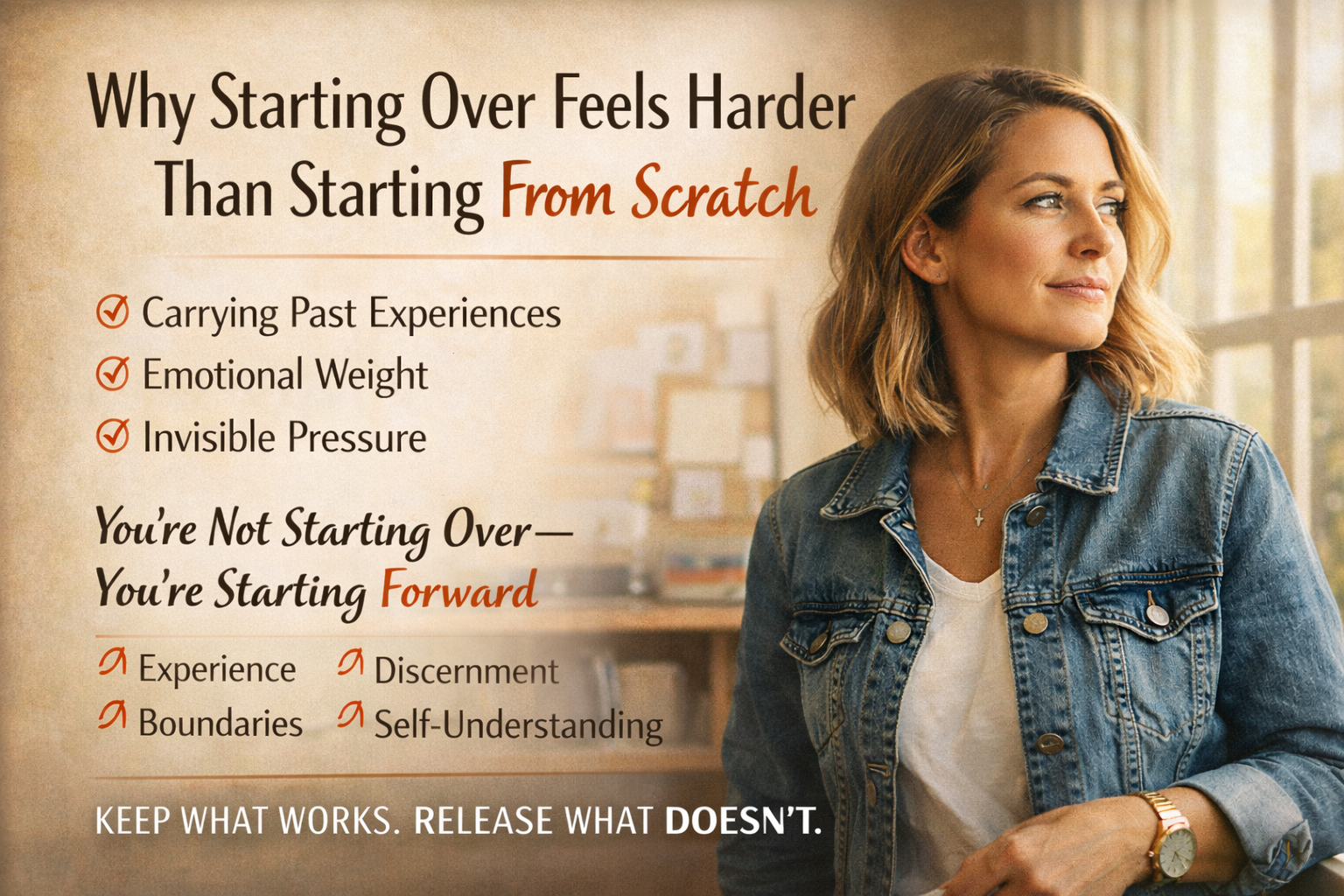
Why Starting Over Feels Harder Than Starting from Scratch
There is a particular kind of exhaustion that comes with starting over. It is not the same nervous excitement that accompanies a brand-new idea. It is heavier. Quieter. More complicated.
Starting from scratch carries optimism. There are no expectations attached to it yet. No audience watching. No previous version to compare yourself to. You are building freely because nothing has been established. There is room to experiment without embarrassment. Mistakes feel educational rather than costly.
Starting over is different.
Starting over means there was already an attempt. There was time invested. Energy spent. Perhaps money invested. There may have been public announcements, launches, updates, declarations of direction. When you start over, you are not just building something new — you are dismantling something old.
That dismantling is what makes it difficult.
It forces you to confront what did not work. It forces you to admit that effort alone did not produce the outcome you expected. It asks you to look honestly at the gaps in structure, clarity, or timing. And because something already existed, there is an emotional attachment to it, even if it was flawed.
There is also identity involved.
When you start from scratch, you are becoming something. When you start over, you are redefining something you already claimed. That shift can feel vulnerable. It may feel as though you are invalidating your past decisions. It may feel like a public reset, even if only a small audience witnessed it.
But starting over is not failure. It is refinement.
Often, what feels like a collapse is actually a narrowing. The first version of a business is frequently built from enthusiasm. You say yes to opportunities. You experiment with offers. You test audiences. You explore different directions. This stage is valuable because it teaches you what resonates and what does not.
Over time, however, enthusiasm must be paired with discernment.
Discernment requires subtraction.
You remove what does not align. You release what no longer reflects your direction. You let go of strategies that generated activity but not progress. From the outside, this can look like regression. Internally, it is consolidation.
Starting over feels harder because it requires clarity. You cannot simply repeat what you did before. You have more information now. You know more about what does not work. That knowledge eliminates certain options. It forces more deliberate decisions.
There is also the weight of comparison. When you begin again, you may compare this version to the previous one. You may question whether you are losing ground. You may worry about perception. You may feel pressure to move quickly to prove that this reset was justified.
That pressure can lead to repeating old patterns.
Many women, after deciding to start over, rush into rebuilding at the same pace they once did. They feel urgency to regain momentum. They launch prematurely. They reintroduce offers before refining structure. They seek visibility before clarifying positioning. In doing so, they recreate the same instability that required a reset in the first place.
Starting over demands patience.
It asks you to build differently, not just rebuild faster.
When done intentionally, starting over is one of the most strategic moves you can make. It allows you to realign your messaging with who you have become. It allows you to restructure your offers around what you have learned. It allows you to correct inefficiencies that were invisible in the beginning.
What makes this stage emotionally difficult is that growth rarely looks dramatic. It looks like quiet decisions. It looks like simplifying a website. It looks like refining language. It looks like removing products. It looks like declining opportunities that no longer fit.
There is less noise. Less announcement. Less visible excitement.
But there is more integrity.
You are no longer building from excitement alone. You are building from experience. That experience carries weight. It informs your boundaries. It shapes your standards. It clarifies your priorities.
Starting from scratch is driven by possibility. Starting over is driven by discernment.
Discernment is heavier because it involves responsibility. You cannot blame inexperience anymore. You cannot claim ignorance. You are choosing deliberately, knowing the cost of misalignment.
That responsibility, however, is also power.
When you choose to start over thoughtfully, you reclaim direction. You stop trying to salvage what no longer fits. You stop defending previous decisions out of pride. You give yourself permission to evolve publicly or privately without apology.
The irony is that starting over often accelerates growth in the long run. The first attempt provides information. The reset integrates that information. The new build benefits from lessons that could not have been learned theoretically.
What once required experimentation now benefits from clarity. What once felt uncertain now has defined parameters. You may move more slowly at first, but the foundation will be stronger. Strong foundations reduce future collapses.
If you are in a season of rebuilding, it does not mean you failed. It may mean you outgrew your previous structure. It may mean your vision sharpened. It may mean your standards increased. None of these are signs of weakness.
They are signs of maturity.
Starting over feels harder because it requires humility, patience, and clarity at the same time. It requires you to trust that refinement is not regression. It requires you to release the version of yourself that built the first iteration in order to become the version capable of building the next.
But when you rebuild from discernment instead of urgency, you do not merely recreate what existed before. You build something aligned. Something stable. Something intentional.
And alignment, once established, is far more sustainable than excitement alone.
If starting over feels heavy, it’s because you’re carrying wisdom — not failure.
Inside Boss Up Club, we focus on clarity, completion, and building forward without burning out.